
Author: Carolyn Kent ACPSEM
Introduction
If we’re going to look at injury we need to decide which evidence is appropriate for which player. Times are changing, and thankfully we appear to be finally acknowledging the fact that women are not small men and, children are not small adults. In this blog we will look at the injury prevention options for adult football players focusing primarily on female data.
The History
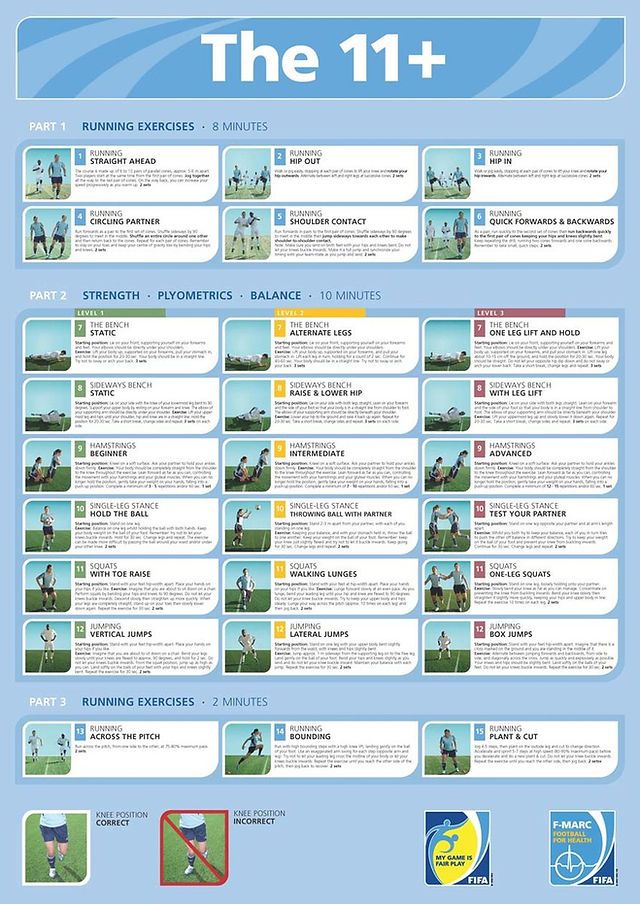
In 1994, Fédération Internationale de Football Association (FIFA) founded F-MARC its medical assessment and research centre to help protect its athletes (1). In 2000, Heidt et al published a study showing that the implementation of an acceleration programme gave less injuries than a control group (2). In 2006, FIFA launched the FIFA 11+, this followed its predecessor “The 11” which had been found to give 11.5% fewer match injuries and 25.3% fewer training injuries when implemented as a warm-up (1).
Common Injuries
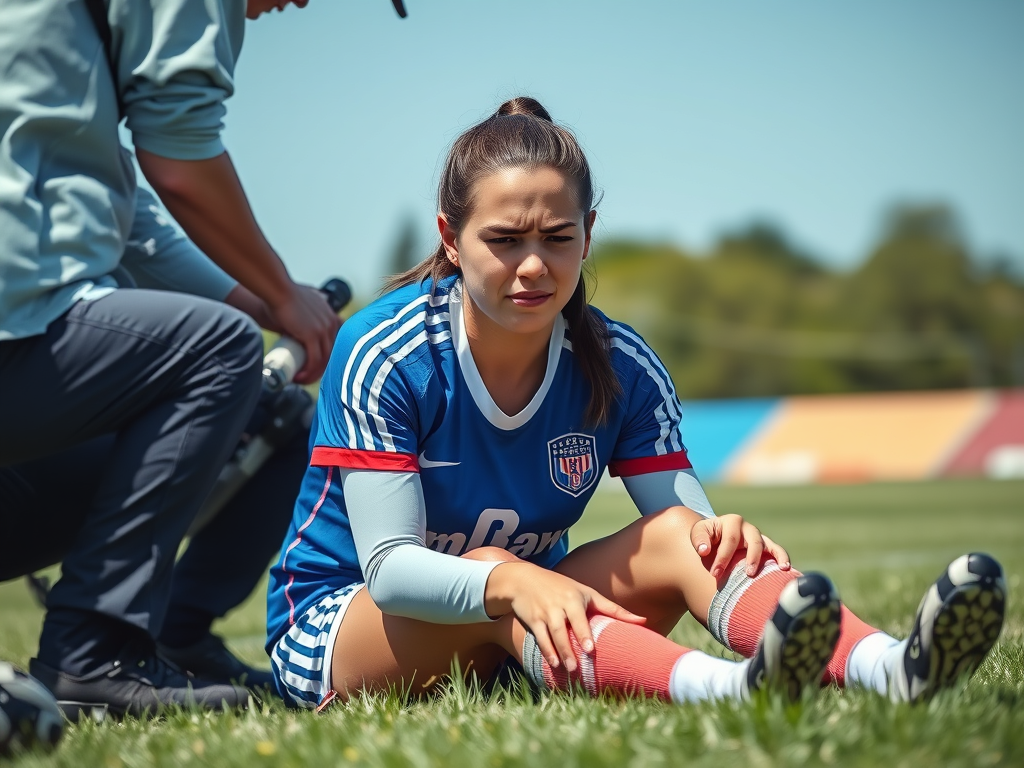
Injury incidence is common across all levels of the women’s game (youth, amateur, elite club, international) (3). The 2024 UEFA Women’s elite club injury study, (covering 2018/2019-2021/22 seasons) highlighted the following:
How did the injuries happen?
Acute injuries 53% (802/1523)
Gradual onset 47% (721/1523)
Matches 63% (366/584)
Training 46% (436/939)
Contact 28% (424/1525) (40% (232/586) of these were in matches, 20% (192/939) in training)
Where was the injury location?
85% of injuries impacted the lower extremities with thigh, knee, and ankle being the most frequent.
- Muscle injuries (39% of all injuries)
- Ligament injuries (20%)
Further breakdown reveals the most common injuries were:
- Thigh muscle injuries (Hamstring 12% (188/1527), Quadriceps 11% (171/1527))
- Lateral ankle injury (7%) (111/1527)
- Concussions (3%) (47/1527)
- MCL injury (3%) (43/1527)
- ACL injury (2%) (33/1527)
ACL had the highest time loss of 38 days per/1000 hours. A typical 23 player squad can therefore expect 35 injuries per season and, could expect seven severe injuries (>28 days time lost) per season.(5)
Things to note
This data relates to elite level female players. Amateur data is needed, if working with a team at amateur level find out how to maintain injury data.
The FIFA 11+
The FIFA 11+ is a 20 minute injury prevention protocol developed by FIFA F-MARC (1). The most recent systematic review has show that this programme cuts all injury by 30% but this review included both male and female data (6). The programme has been shown to be effective when completed at least 1.5 x per week as part of a structured warm up (7).

Resources
A playlist of the entire program can be found in video form here: FIFA 11+
Have something to share?
If you’d like to contribute a blog or appear on our podcast for women’s football hub, please contact us at: info@womensfootballhub.com
References:
- Bizzini M, Junge A, Dvorak J. Implementation of the FIFA 11+ football warm up program: How to approach and convince the Football associations to invest in prevention. Br J Sports Med. 2013 Aug 1;47(12):803.
- Heidt RS, Sweeterman LM, Carlonas RL, Traub JA, Tekulve FX. Avoidance of soccer injuries with preseason conditioning. The American Journal of Sports Medicine. 2000 May 1;28(5):659–62. doi:10.1177/03635465000280050601
- Horan D, Büttner F, Blake C, Hägglund M, Kelly S, Delahunt E. Injury incidence rates in women’s football: a systematic review and meta-analysis of prospective injury surveillance studies. Br J Sports Med. 2023 Apr 1;57(8):471.
- Hallén A, Tomás R, Ekstrand J, Bengtsson H, Van den Steen E, Hägglund M, Waldén M. UEFA Women’s Elite Club Injury Study: a prospective study on 1527 injuries over four consecutive seasons 2018/2019 to 2021/2022 reveals thigh muscle injuries to be most common and ACL injuries most burdensome. Br J Sports Med. 2024 Feb 7;58(3):128-135. doi: 10.1136/bjsports-2023-107133. PMID: 38182274; PMCID: PMC10894819.
- Hallén A, Tomás R, Ekstrand J, Bengtsson H, Van den Steen E, Hägglund M, Waldén M. UEFA Women’s Elite Club Injury Study: a prospective study on 1527 injuries over four consecutive seasons 2018/2019 to 2021/2022 reveals thigh muscle injuries to be most common and ACL injuries most burdensome. Br J Sports Med. 2024 Feb 7;58(3):128-135. doi: 10.1136/bjsports-2023-107133. PMID: 38182274; PMCID: PMC10894819.
- Sadigursky D, Braid JA, De Lira DNL, Machado BAB, Carneiro RJF, Colavolpe PO. The FIFA 11+ injury prevention program for soccer players: a systematic review. BMC Sports Sci Med Rehabil. 2017 Nov 28;9:18. doi: 10.1186/s13102-017-0083-z. PMID: 29209504; PMCID: PMC5704377.
- Barengo NC, Meneses-Echávez JF, Ramírez-Vélez R, Cohen DD, Tovar G, Bautista JE. The impact of the FIFA 11+ training program on injury prevention in football players: a systematic review. Int J Environ Res Public Health. 2014 Nov 19;11(11):11986-2000. doi: 10.3390/ijerph111111986. PMID: 25415209; PMCID: PMC4245655.
 Women's Football Hub
Leave a comment