
Author: Carolyn Kent
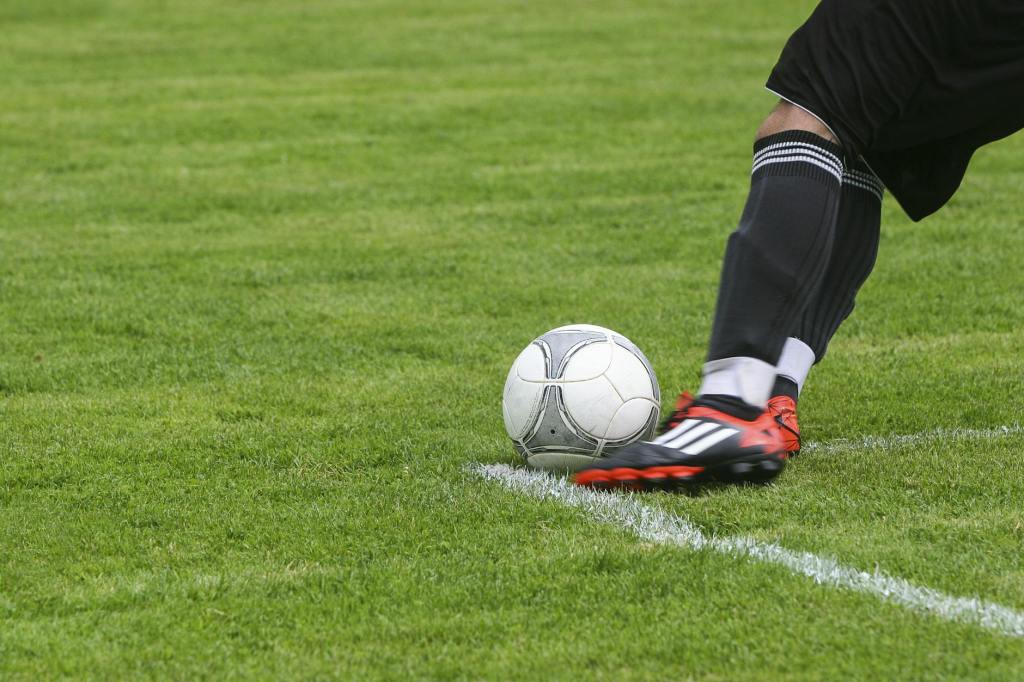
Pain and Football Boots
In 2023, the European Club Association (ECA) published the results of its survey which stated that 82% of female players surveyed get pain with their football boots, the survey also showed that 34% of female players complained of pain at the heel (1). As football boots are designed with the male foot in mind, it should come as no surprise that many females get pain with football boots designed for a male foot (2). The ECA study also highlighted that black players were more likely to suffer heel pain (48%) than their rest of their counterparts (1).

Sex differences between male and female feet
Female feet have decreased 1st metatarsal length, increased 1st metatarsal joint angle, a higher arch, proximally placed 5th metatarsal, wider forefoot relative to foot length and a higher arch (4). As highlighted earlier ethnicity of the player should be taken into consideration and the foot will of course change during growth, so youth players may have challenges getting a boot that fits (1)(5).
Boots
Boots are a modifiable risk factor for injury in football i.e. you can change them. They have been associated with potential injury risk, as the outsole (the area with the studs) is required for traction with the playing surface and studs can get caught causing injury (6). Good traction, is essential for performance as it allows players to accelerate, cut and change direction and poor traction can lead to slipping (7). However, as boots are designed for the male foot, the outsole is also designed for male power and explosiveness. As female players do not generate the same power and explosiveness as male players, they will not require the same amount of traction, making boots made for their bodies seem logical. Despite this theory there are only 32 published articles on technology in women’s football (3).

Playing surface
With regards to surface most female players prefer to play on natural grass (8). However, artificial surfaces are becoming an increasing popular alternative with choices of hybrid (95% natural grass with 5% synthetic fibres), synthetic (100% man made fibres), 2G (Shorter and denser, sand based), 3G (Long-pile synthetic grass with a pile height of 40mm to 65mm. Typically filled with a combination of sand and performance infill)(9)(10). It should be noted that there is not a lot of published evidence to suggest that artificial turf increases injury rate overall (2). However, biomechanical studies have found increased frictional forces on artificial turf and a 2022 study found that female players were at a higher risk of ACL injuries compared to their male counterparts when playing on artificial turf (11).
The Future
Much more research is required into female football boots and overall technology for women in football. Thankfully, with the growth of women’s football, the plans to conduct this research are in place and manufacturers appear willing to invest in female specific football boots.
If you are interested in learning more about this topic we would recommend this excellent Aspetar webinar by Dr Katrine Okholm-Kryger.
References
- Wrack S. Survey finds 82% of female players experience pain wearing football boots. The Guardian. 2023.
- Okholm Kryger K, Thomson A, Tang A, Brown N, Bruinvels G, Rosenbloom C, Carmody S, Williamson L, Datson N, Jobson E, Mehta R. Ten questions in sports engineering: technology in elite women’s football Sports Engineering. 2022 Jan;25(1). PMCID: PMC9667860.
- Okholm Kryger K, Wang A, Mehta R, Impellizzeri FM, Massey A, McCall A. Research on women’s football: a scoping review. Sci Med Footb. 2022 Dec 1;6(5):549-558. doi: 10.1080/24733938.2020.1868560. Epub 2021 Jan 8. PMID: 36540910.
- Thomson, A, Wannop, J & Kryger, K. (2021). “HEY COACH/DOCTOR/ PHYSIO/PODIATRIST/ DAD/MUM: WHAT FOOTBALL BOOT IS BEST FOR ME”?. Aspetar. 2021 Dec;10
- Müller S, Carlsohn A, Müller J, Baur H, Mayer F. Static and dynamic foot characteristics in children aged 1-13 years: a cross-sectional study. Gait Posture. 2012 Mar;35(3):389-94. doi: 10.1016/j.gaitpost.2011.10.357. Epub 2011 Nov 25. PMID: 22118730.
- Mancino F, Kayani B, Gabr A, Fontalis A, Plastow R, Haddad FS. Anterior cruciate ligament injuries in female athletes: risk factors and strategies for prevention. Bone Jt Open. 2024 Feb 5;5(2):94-100. doi: 10.1302/2633-1462.52.BJO-2023-0166. PMID: 38310925; PMCID: PMC10838619.
- Buchheit M, Samozino P, Glynn JA, Michael BS, Al Haddad H, Mendez-Villanueva A, Morin JB. Mechanical determinants of acceleration and maximal sprinting speed in highly trained young soccer players. J Sports Sci. 2014 Dec;32(20):1906-1913. doi: 10.1080/02640414.2014.965191. Epub 2014 Oct 30. PMID: 25356503.
- Roberts JR, Osei-Owusu P, Mears AC, Harland AR. Elite Players’ Perceptions of Football Playing Surfaces: A Qualitative Study. Res Q Exerc Sport. 2020 Jun;91(2):239-251. doi: 10.1080/02701367.2019.1660757. Epub 2019 Oct 24. PMID: 31647370.
- O’Meagher R, O’Reilly J, Ali A. The effect of different playing surfaces on soccer skill performance. Int J Sports Sci Coaching. 2022;17(6):1378–1384. doi: 10.1177/17479541211066393.
- SIS Pitches [Internet]. SIS Pitches. 2019. Available from: https://www.sispitches.com/the-definitive-guide-to-all-types-of-astroturf-pitches-2g-3g-4g-and-beyond/
- Xiao M, Lemos JL, Hwang CE, Sherman SL, Safran MR, Abrams GD. Increased Risk of ACL Injury for Female but Not Male Soccer Players on Artificial Turf Versus Natural Grass: A Systematic Review and Meta-Analysis. Orthopaedic Journal of Sports Medicine. 2022;10(8). doi:10.1177/23259671221114353
 Women's Football Hub
Leave a comment