
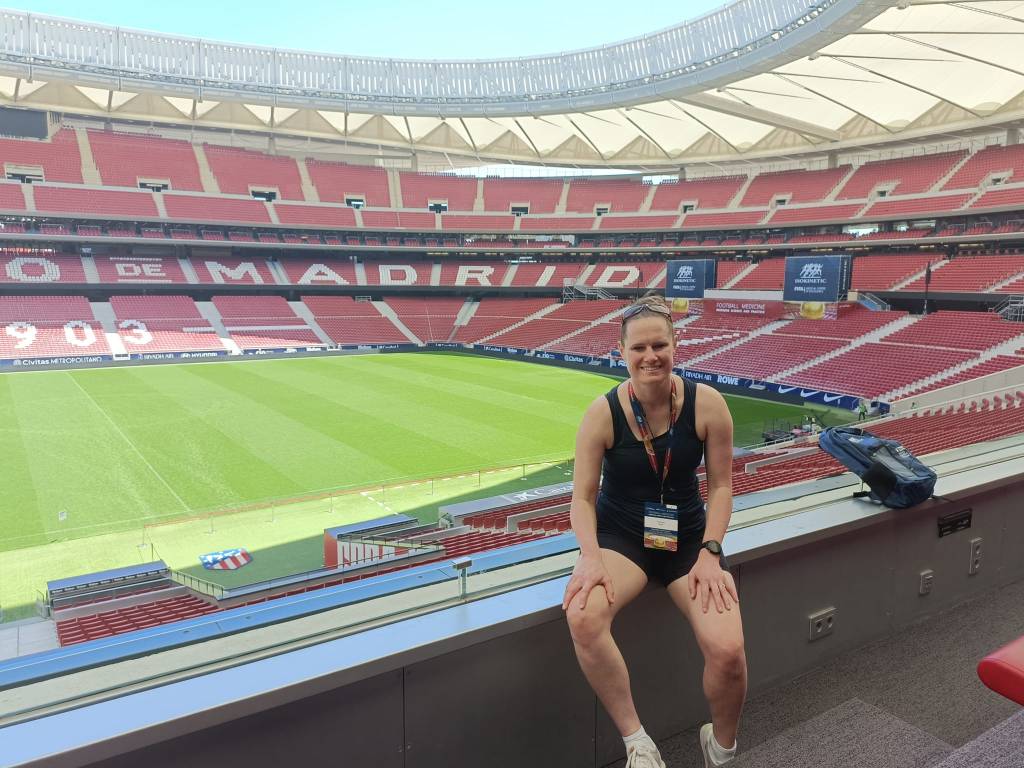
The FIFA Isokinetic conference was held in Madrid recently, here’s Carolyn Kent’s top 10 take homes.
1) Thigh muscle injuries continue to be the most common injury for both men (Hamstring) and Women (Hamstring and quad).
2) ACL injury is still the greatest injury for time loss.
3) Due to the cross bracing protocol we now know that the ACL can heal. Not all people will need surgery. ACL decision making tool by the University of Melbourne is available to assist and all options need to be given to the patient if true informed consent is to be gained. To not do so is unethical.
4) Any player sustaining an ACL injury has a 7x increased risk of needing a total knee replacement. Long term knee health needs to be considered.
5) Injury prevention protocols like the FIFA 11+, FIFA 11 Kids and FIFA 11S for GK shoulders cut injury but still are not implemented enough. Adherence and compliance is low, which is frustrating as these protocols can cut injuries by up to 50% and can easily be done as part of a structured warm up.
6) Women’s football is the fastest growing sport in the world. The explosion in popularity means that our data is evolving quickly and the data we collect from one season may be out of date by the time we have to return them to play post injury e.g strikers now sprint double the amount they did at the previous Women’s World Cup. Training and playing is making the players faster, stronger and fitter. Your baseline measurements may not be adequate.
7) Female players need major investment in research, facilities and equipment e.g. Breast health, return to play post partum, better pitches/S and C facilities and football boots. Greater than 80% of female players get pain with their football boots which shouldn’t be a surprise as they’re wearing equipment designed for a male foot.
8) Most injuries happen with decelerating movements. Training for this must be considered for injury prevention and performance. Eccentric training and a good relationship with the strength and conditioning team is key for athlete health.
9) Patient education – Use the 4 questions of self efficacy and help the patient answer: What is wrong with me? What can you (The patient) do about it? What can I (The professional) do about it? How long will it take?
10) Concussion – We haven’t even scratched the surface and when the consequences of this injury means potential long term neurological disease like Parkinson’s and Motor Neurons we must look at how we avoid, manage and treat this issue. Rule change will come here and Copa America is about to trial the concussion substitution and pink card.
Adiós Madrid, gracias y hasta pronto 


 Women's Football Hub
Leave a comment