
Author Carolyn Kent, Lecturer in Physiotherapy, University of Cumbria
Editor Dr Anne Leung, PT, DPT. Arcadia University, Department of Physical Therapy.
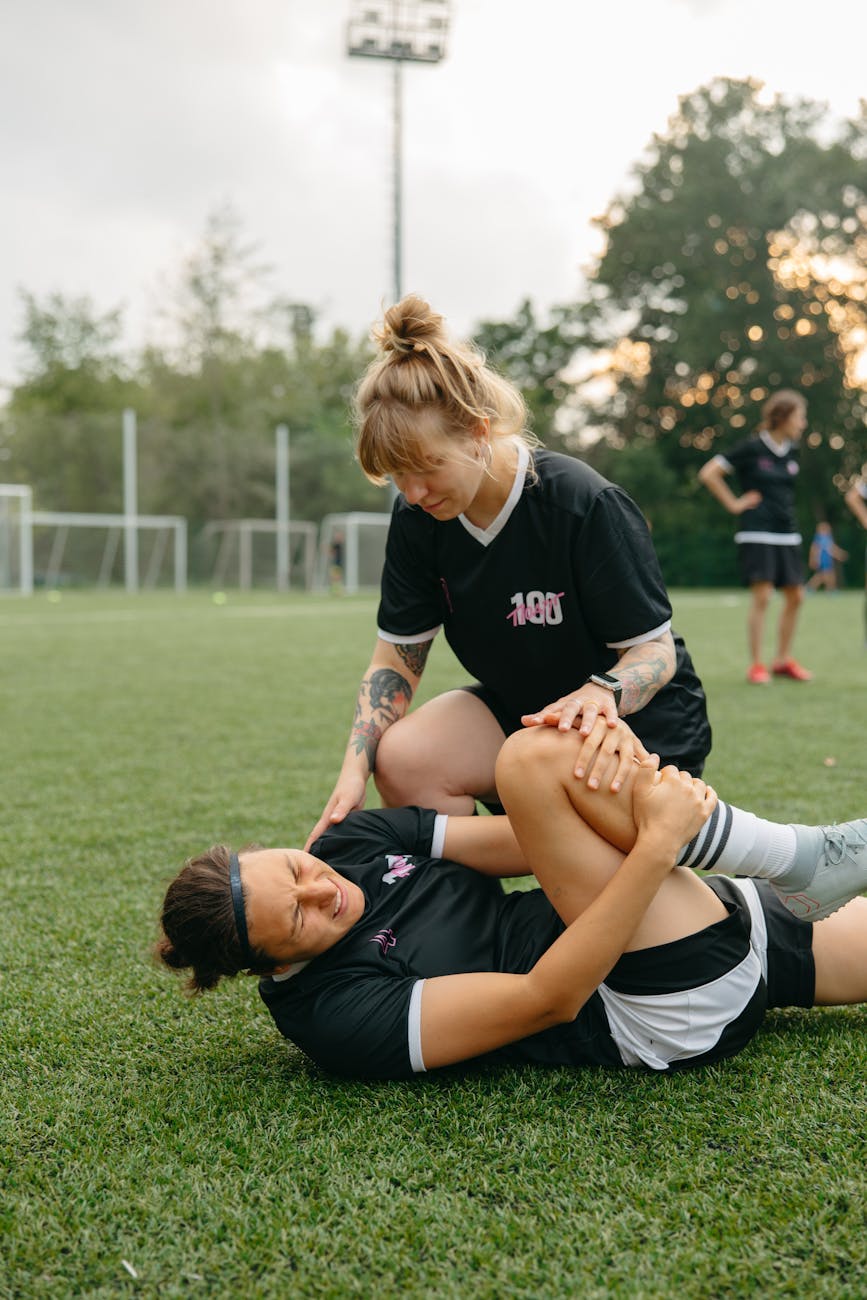
The ACL is one of the major ligaments in the knee and it connects the shin bone to the thigh bone (1). If you’re involved in football, you’ll probably know that we have a real problem with anterior cruciate ligament (ACL) tears in football. The data has shown since the 1990’s that females are 3-6 times more likely to tear their ACL than boys (2). There’s even data showing they may be up to 8 times more likely to sustain this injury (3)(4). In the recent 2024 UEFA elite club injury study ACL injuries were found to be the injury with the biggest time loss for female players (5).
ACL Reconstruction (ACL-R)
ACL-R is a common surgical procedure for female football players and the three graft options that are commonly used are bone patellar tendon bone (BPTB), hamstring, and bone quadriceps tendon grafts (6). BPTB has historically been considered the gold standard for ACL-R (7). The addition of a lateral extra-articular tenodesis (LET) to the ACL reconstruction is showing early potential to decrease re-tear rates by preventing excessive rotational movements (8). However, it should be noted that surgery with a graft from your own body is not the only option, you can use a graft from another person, some people choose synthetic grafts and some people do not require surgery at all (9).
Rehabilitation of the quadriceps after ACL-R
The failure of the quadriceps to perform adequately is common after ACL-R and has been shown to happen in both the operated leg and the non-operated leg. The performance deficit is worse in females and also takes longer to recover in those who have has a BPTB graft (10)(11)(12) Some of this quadriceps deficit appears to be related to the nervous system and is called arthrogenic muscle inhibition (AMI) (13). The neural system also shows sex related differences in the corticospinal tract (the pathway for the nerve signal from the brain to the quadriceps), post ACL-R with females, resulting in females showing reduced quadriceps performance compared to male counterparts (14). More detail on graft type considerations and post operative rehabilitation for clinicians can be found here.
The LSI and OKC’s
Comparing quadriceps function between the operated leg and the non-operated leg is done via the limb symmetry index (LSI). It is calculated by dividing the score of the operated leg by the non operated leg then multiplying this by 100 to get a percentage (15).
Operated limb/non operated limb x 100 = LSI %
So, you could use an athletes score from a quads extension machine to compare their operated vs non-operated limb. An athlete should aim to have a minimal LSI of 90%. However, this alone is not enough to return an athlete to play, and it should be noted that LSI’s have been shown to overestimate a patient’s knee function (16). This is another reason why the athlete’s return to the field should be based on a multitude of tests and not time.
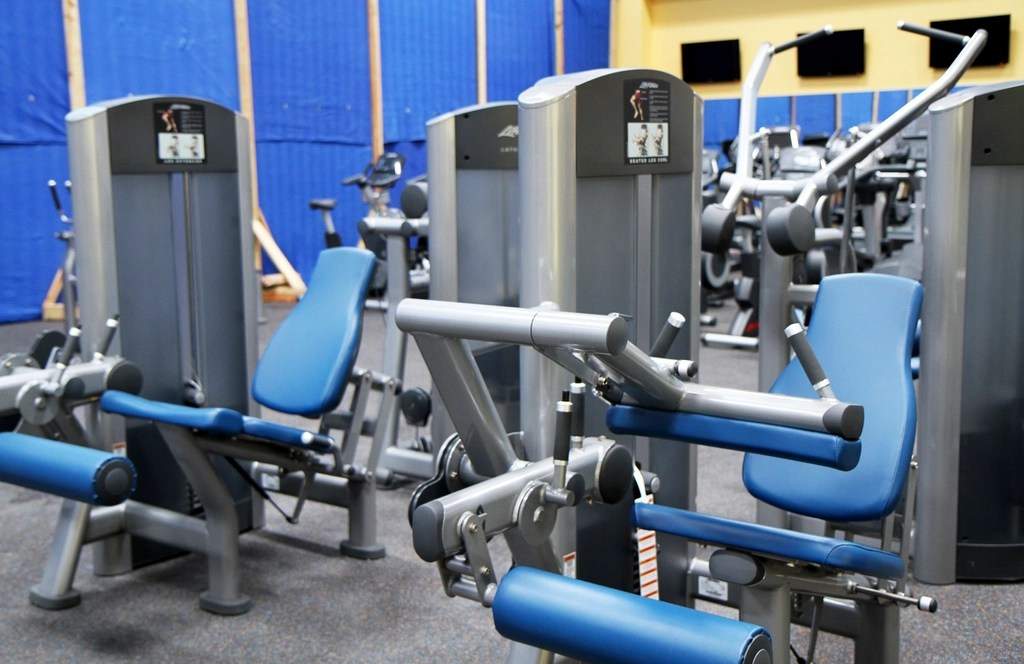
On the subject of quads extension machines let’s bust the very outdated theory that open kinetic chain (OKC) quads exercises (the kind where you sit and then straighten your knee, either with no weight at all or you put a bar or a weight across/around the bottom of your shin bone) are unsafe. There are papers that clearly state that open kinetic chain exercises are safe in early rehabilitation and low loads to the point of failure can be utilised (17). These exercises are especially safe at the angle of 90-40 degrees (18). As the athlete progresses more load should be added and at least 60-70% of their 1RM advised (17).
So, it’s all about quads?
No, it’s not. They are an essential part of returning an athlete to the field after ACL-R. As some studies have shown that female athletes have a significantly lower rate of return to sport than male counterparts 65 v 75% (19). Strengthening the quadriceps to ensure we are building a foundation upon which activities like running, cutting and jumping can be built upon is essential. Finally, getting the quads to above 90% on the LSI significantly reduces knee re-injury rate (20).
Have something to contribute? Want to write a guest blog with us? Contact us at info@womensfootballhub.com
References
- Noyes FR. The function of the human anterior cruciate ligament and analysis of single- and double-bundle graft reconstructions. Sports Health. 2009 Jan;1(1):66-75. doi: 10.1177/1941738108326980. PMID: 23015856; PMCID: PMC3445115.
- Parsons JL, Coen SE, Bekker S. Anterior cruciate ligament injury: towards a gendered environmental approach. Br J Sports Med. 2021 Sep 1;55(17):984.
- Ardern CL, Ekås G, Grindem H, Moksnes H, Anderson A, Chotel F, et al. 2018 International Olympic Committee consensus statement on prevention, diagnosis and management of paediatric anterior cruciate ligament (ACL) injuries. Knee Surgery, Sports Traumatology, Arthroscopy. 2018 Apr 1;26(4):989–1010.
- Montalvo AM, Schneider DK, Yut L, Webster KE, Beynnon B, Kocher MS, Myer GD. “What’s my risk of sustaining an ACL injury while playing sports?” A systematic review with meta-analysis. Br J Sports Med. 2019 Aug;53(16):1003-1012. doi: 10.1136/bjsports-2016-096274. Epub 2018 Mar 7. PMID: 29514822; PMCID: PMC6561829.
- Hallén A, Tomás R, Ekstrand J, Bengtsson H, Van den Steen E, Hägglund M, Waldén M. UEFA Women’s Elite Club Injury Study: a prospective study on 1527 injuries over four consecutive seasons 2018/2019 to 2021/2022 reveals thigh muscle injuries to be most common and ACL injuries most burdensome. Br J Sports Med. 2024 Feb 7;58(3):128-135. doi: 10.1136/bjsports-2023-107133. PMID: 38182274; PMCID: PMC10894819.
- Macaulay AA, Perfetti DC, Levine WN. Anterior cruciate ligament graft choices. Sports Health. 2012 Jan;4(1):63-8. doi: 10.1177/1941738111409890. PMID: 23016071; PMCID: PMC3435898.
- Koh HS, In Y, Kong CG, Won HY, Kim KH, Lee JH. Factors affecting patients’ graft choice in anterior cruciate ligament reconstruction. Clin Orthop Surg. 2010 Jun;2(2):69-75. doi: 10.4055/cios.2010.2.2.69. Epub 2010 May 4. PMID: 20514263; PMCID: PMC2867201.
- Cavaignac E, Mesnier T, Marot V, Fernandez A, Faruch M, Berard E, Sonnery-Cottet B. Effect of Lateral Extra-articular Tenodesis on Anterior Cruciate Ligament Graft Incorporation. Orthop J Sports Med. 2020 Nov 30;8(11):2325967120960097. doi: 10.1177/2325967120960097. PMID: 33299900; PMCID: PMC7711232.
- Runer A, Keeling L, Wagala N, Nugraha H, Özbek EA, Hughes JD, Musahl V. Current trends in graft choice for anterior cruciate ligament reconstruction – part I: anatomy, biomechanics, graft incorporation and fixation. J Exp Orthop. 2023 Apr 1;10(1):37. doi: 10.1186/s40634-023-00600-4. PMID: 37005974; PMCID: PMC10067784.
- Kim DK, Park WH. Sex differences in knee strength deficit 1 year after anterior cruciate ligament reconstruction. J Phys Ther Sci. 2015 Dec;27(12):3847-9. doi: 10.1589/jpts.27.3847. Epub 2015 Dec 28. PMID: 26834366; PMCID: PMC4713805.
- Kuenze C, Lisee C, Birchmeier T, Triplett A, Wilcox L, Schorfhaar A, Shingles M. Sex differences in quadriceps rate of torque development within 1 year of ACL reconstruction. Phys Ther Sport. 2019 Jul;38:36-43. doi: 10.1016/j.ptsp.2019.04.008. Epub 2019 Apr 17. PMID: 31042614.
- Smith AH, Capin JJ, Zarzycki R, Snyder-Mackler L. Athletes With Bone-Patellar Tendon-Bone Autograft for Anterior Cruciate Ligament Reconstruction Were Slower to Meet Rehabilitation Milestones and Return-to-Sport Criteria Than Athletes With Hamstring Tendon Autograft or Soft Tissue Allograft : Secondary Analysis From the ACL-SPORTS Trial. J Orthop Sports Phys Ther. 2020 May;50(5):259-266. doi: 10.2519/jospt.2020.9111. Epub 2019 Nov 27. PMID: 31775553; PMCID: PMC7196003.
- Sonnery-Cottet B, Saithna A, Quelard B, Daggett M, Borade A, Ouanezar H, Thaunat M, Blakeney WG. Arthrogenic muscle inhibition after ACL reconstruction: a scoping review of the efficacy of interventions. Br J Sports Med. 2019 Mar;53(5):289-298. doi: 10.1136/bjsports-2017-098401. Epub 2018 Sep 7. Erratum in: Br J Sports Med. 2019 Dec;53(23):e8. doi: 10.1136/bjsports-2017-098401corr1. PMID: 30194224; PMCID: PMC6579490.
- Leung A, Kantak S, Hammoud S, Abraham R, Zarzycki R. Sex differences in corticospinal excitability and quadriceps performance after anterior cruciate ligament reconstruction. J Orthop Res. 2024 Apr;42(4):769-776. doi: 10.1002/jor.25725. Epub 2023 Nov 27. PMID: 37938095; PMCID: PMC10978293.
- Ithurburn MP, Altenburger AR, Thomas S, Hewett TE, Paterno MV, Schmitt LC. Young athletes after ACL reconstruction with quadriceps strength asymmetry at the time of return-to-sport demonstrate decreased knee function 1 year later. Knee Surg Sports Traumatol Arthrosc. 2018 Feb;26(2):426-433. doi: 10.1007/s00167-017-4678-4. Epub 2017 Sep 16. PMID: 28918506.
- Wellsandt E, Failla MJ, Snyder-Mackler L. Limb Symmetry Indexes Can Overestimate Knee Function After Anterior Cruciate Ligament Injury. J Orthop Sports Phys Ther. 2017 May;47(5):334-338. doi: 10.2519/jospt.2017.7285. Epub 2017 Mar 29. PMID: 28355978; PMCID: PMC5483854.
- Noehren B, Snyder-Mackler L. Who’s Afraid of the Big Bad Wolf? Open-Chain Exercises After Anterior Cruciate Ligament Reconstruction. J Orthop Sports Phys Ther. 2020 Sep;50(9):473-475. doi: 10.2519/jospt.2020.0609. PMID: 32867579.
- Wilk KE, Arrigo CA, Bagwell MS, Finck AN. Considerations with Open Kinetic Chain Knee Extension Exercise Following ACL Reconstruction. Int J Sports Phys Ther. 2021 Feb 2;16(1):282-284. doi: 10.26603/001c.18983. PMID: 34395052; PMCID: PMC8341750.
- Mancino F, Kayani B, Gabr A, Fontalis A, Plastow R, Haddad FS. Anterior cruciate ligament injuries in female athletes: risk factors and strategies for prevention. Bone Jt Open. 2024 Feb 5;5(2):94-100. doi: 10.1302/2633-1462.52.BJO-2023-0166. PMID: 38310925; PMCID: PMC10838619.
- Grindem H, Snyder-Mackler L, Moksnes H, Engebretsen L, Risberg MA. Simple decision rules can reduce reinjury risk by 84% after ACL reconstruction: the Delaware-Oslo ACL cohort study. Br J Sports Med. 2016 Jul;50(13):804-8. doi: 10.1136/bjsports-2016-096031. Epub 2016 May 9. PMID: 27162233; PMCID: PMC4912389.
 Women's Football Hub
Leave a comment