
By Siobhan O’Donovan – Chartered Physiotherapist & Founder of Posture Fitting
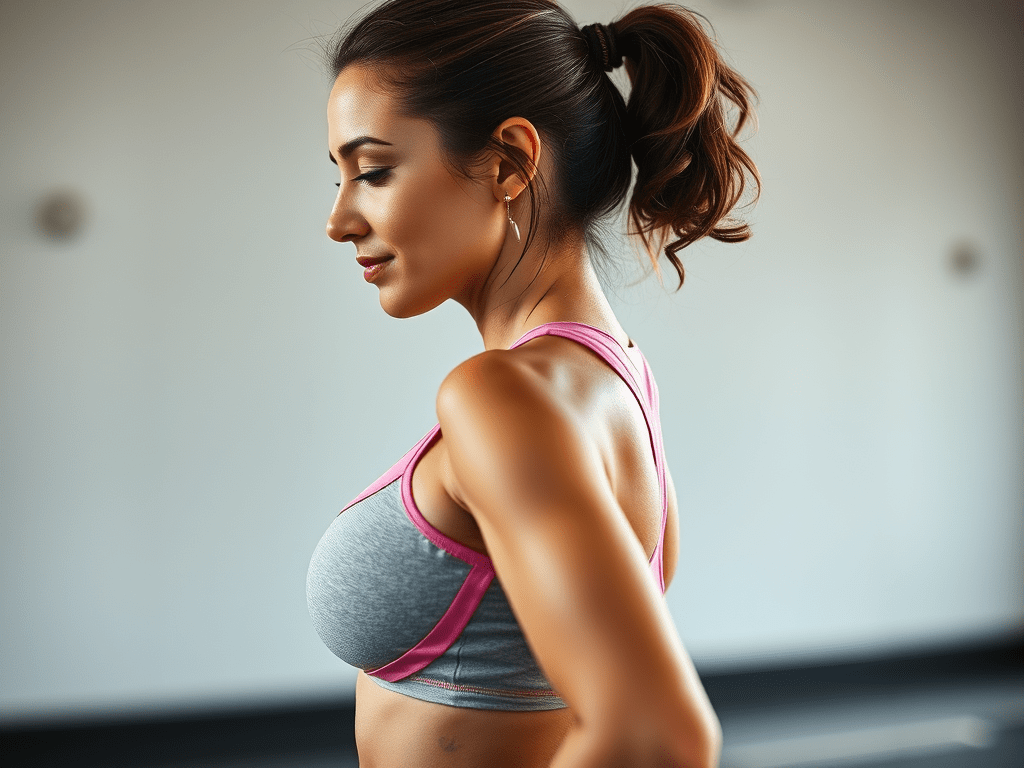
Breast weight and its impact is a problem that is totally hidden in plain sight, despite its significant effects on girls’ and women’s posture. And, while at face value that may not seem worthy of concern, the consequences are in fact both multiple and considerable, affecting pain, pelvic health, activity participation, self-image & self-confidence, and even performance in a sporting or creative environment. As a physiotherapist, former international sportsperson, and the founder of Posture Fitting, I’ve dedicated my recent career to raising awareness about how breast weight impacts the mind and the body, and what we can do about it.
How Breast Weight Affects Posture
Breasts are, fundamentally and regardless of size, a weight that acts forward on the body, which means our muscles must work harder to maintain balance and resist gravity. Our spine, in particular, plays a crucial role in this, interacting with the muscles around it to keep us in a stable, stacked position.
The simplest way to visualize this is with a filing cabinet analogy (with credit to Michael O’Reilly, aka The Neck Physio). If you leave the top drawer open, the whole cabinet starts to tip forward. Similarly, when either the head or breast weight, or both, pulls the body forward, it influences the alignment of the spine, impacting the upper and mid-back, the lower back, and the neck. This forward shift creates unnecessary strain, on joints and surrounding muscles, leading to discomfort and increasing the potential for longer-term alignment issues if not properly managed.
The Role of Internal Activation
Many women turn to external support—bras—to manage breast weight but are not aware of the importance of internal activation. Internal activation refers to engaging the back muscles to counteract the forward pull of breast weight created by gravity.
If we “give” to gravity, thereby lowering our chest and rounding our middle back, the surrounding back muscles adopt a lengthened position, with no contracting activity and therefore can weaken over time. This position can also increase stress on our spine as the torso load distribution changes. A properly fitted bra can help to temporarily improve posture, but it is not sustainable on its own. By improving our postural awareness, we can encourage the regular activation of appropriate muscles, thereby lifting our torso up from its downward orientation. This creates a more stable foundation, which, when combined with an optimally fitted bra, can transform body alignment into a more empowered posture whilst bringing the breast position from “dipped headlights” to “full beam” and ultimately to “high beam”, where gravity’s impact is significantly lessened.
External Support: Why Your True Bra Size is the One That Fits
Most women wear bras, but few realize just how vital the right fit is, and a vast number of women are in poorly fitted bras that fail to provide the necessary support. Bras that are too loose in the band and too small in the cup usually result in discomfort and a totally unjustified hatred of wires. It’s not the wire’s fault, it is the way it is being worn, which comes down to the fit!
An optimally fitted bra should:
✅ Have a band that sits firmly without riding up the back.
✅ Underwire should lie against the ribcage, not on breast tissue.
✅ Feel comfortable enough that you forget you’re wearing it.
When women say they can’t wait to take their bra off at the end of the day, it’s almost inevitably because their fit is incorrect. A properly fitted bra should feel like a second skin, not a burden.
Sports Bras: Finding the Right Fit for Performance
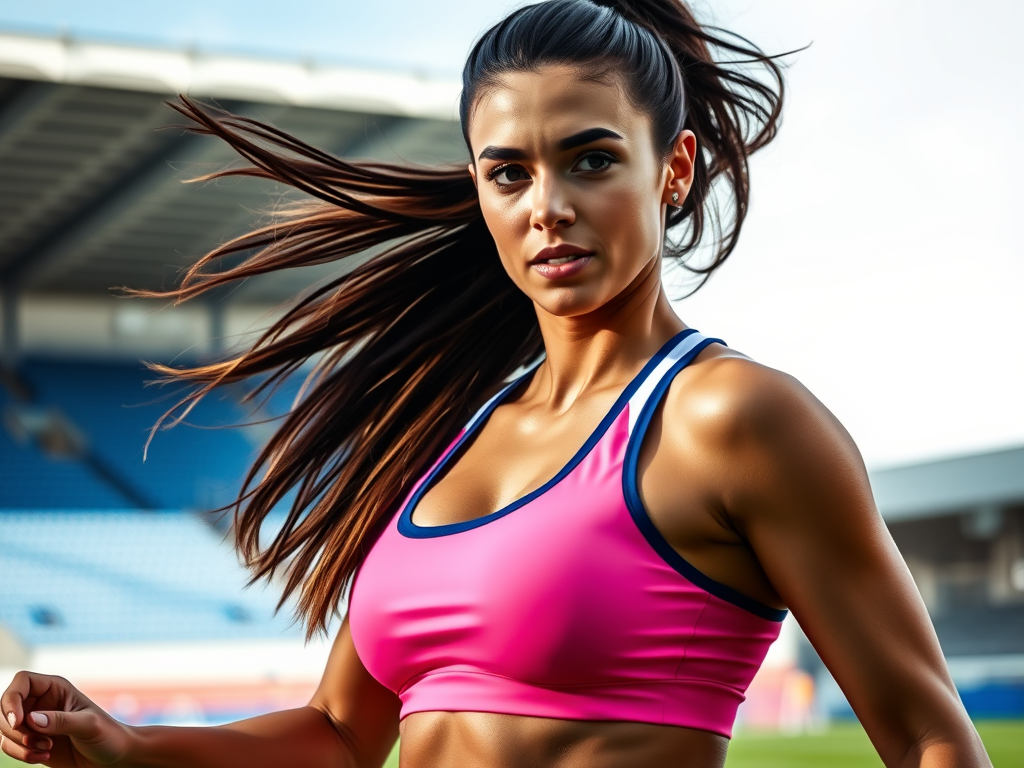
When it comes to sports, the need for good breast support becomes even greater. Research shows that inadequate breast support can lead to reduced physical performance, and it is even a factor in young girls dropping out of sports.
There are three main types of sports bras:
1️⃣ Compression – Presses the breasts against the chest to minimize movement. 2️⃣ Encapsulation – Separates and supports each breast individually.
3️⃣ Hybrid – Combines compression and encapsulation for maximum support.
Not all sports bras marketed as “high-impact” actually provide the necessary support. Studies show that 33% of bras labelled as high-support do not in fact meet the performance standards to be considered high-support. That’s why it’s crucial to understand your fit and test your sports bra by moving around before purchasing.
Empowering Women Through Education
The number 1 reason that women struggle with bra fit is a lack of education. Many are never taught how to properly fit themselves, relying instead on retail fitting situations, some of which still use inaccurate measuring techniques.
This is why I founded Posture Fitting, a service designed to teach women how to manage their breast weight both internally and externally, crucially learning how to fit themselves properly so that they are self-reliant in this endeavour. I also run Gals against Gravity, an educational initiative that raises awareness about breast weight’s impact on posture, performance, and perception. No surprise then that I am now known as The Booby Physio!
By understanding our own bodies and how they work, we can make informed choices about support, posture, and long-term health. Whether you’re a parent guiding a young girl through her first bra fitting or an athlete looking for the right sports bra, knowledge is key.
Final Thoughts
Breast weight is not just a cosmetic issue—it has real implications for health and wellbeing, physically, psychologically and socially. By addressing both internal and external support, women can take control of their body via its posture, reducing discomfort on may levels and optimizing their movement.
If you want to learn more about optimally supporting your breast weight, you can find me on Instagram at @posture.fitting, on Facebook under Posture Fitting, visit posturefittingphysio.com or search for The Booby Physio.
Let’s start the conversation and enlighten and empower women to stand tall, in every sense of those words!
 Women's Football Hub
Leave a comment