
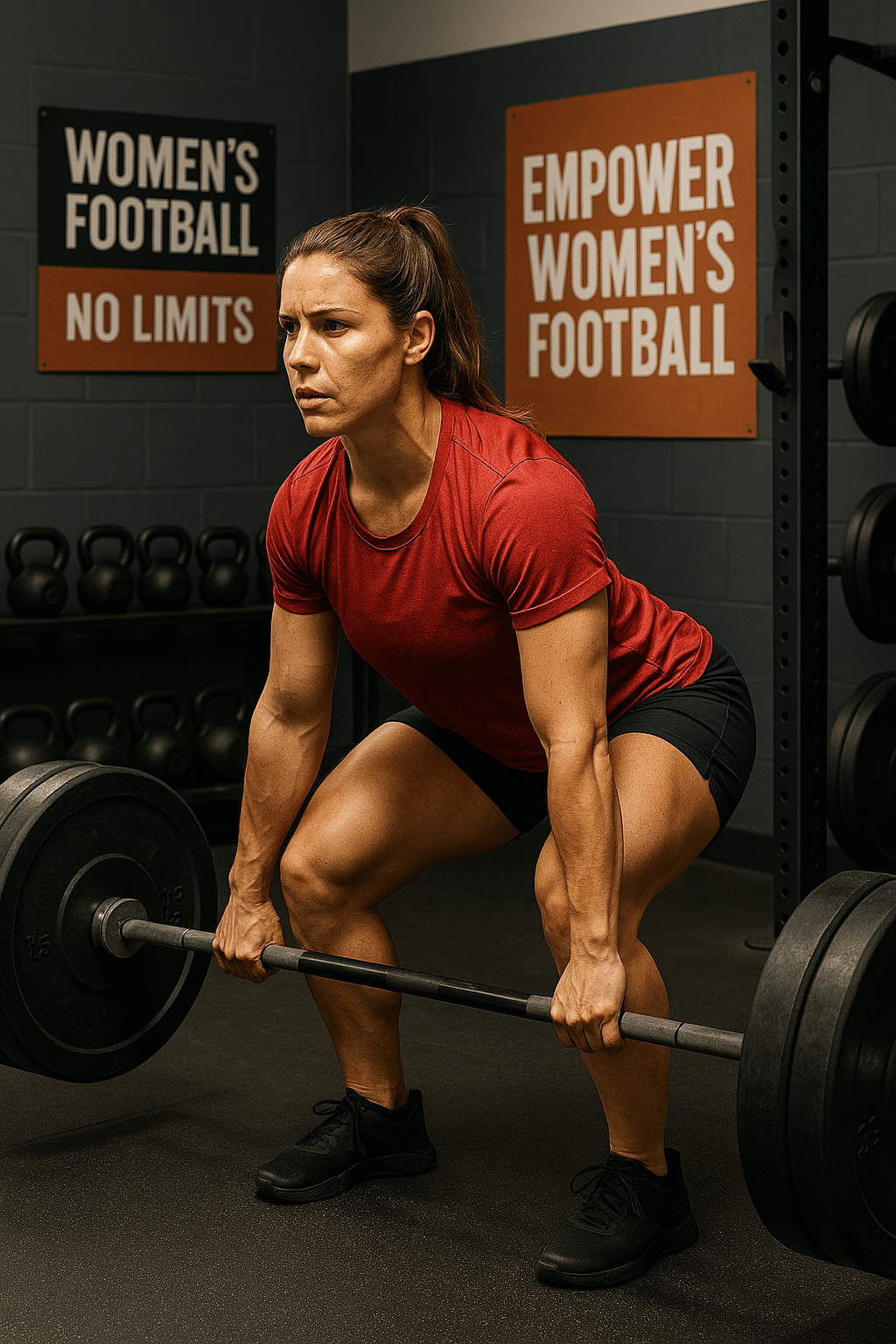
In this episode of the Women’s Football Hub podcast, we’re joined by Sarah Payne — strength & conditioning coach, footballer for Stevenage FC, and founder of the Human First Method. Sarah recently returned to the pitch after a year-long injury and shares real talk on the role of S&C in performance, recovery, and injury prevention — especially for girls and women in football.
From gym fears to football gains, we break down the barriers keeping girls from lifting and offer practical advice for coaches, players, and parents.
“Strength training makes you bulky” — and other myths we’re done with
One of the biggest barriers Sarah sees with youth and female athletes is outdated beliefs — like the idea that lifting weights makes you bulky or slow.
“We don’t have the testosterone levels to look like bodybuilders,” Sarah explains. “And most female footballers aren’t training like bodybuilders anyway. Strength work is there to build resilience, not bulk.”
In fact, strength training can:
- Support sprinting, acceleration, and power
- Improve change of direction and recovery
- Reduce injury risk
- Build confidence and consistency on the pitch
Confidence starts with education
The gym can feel intimidating — especially for new players, younger girls, or anyone coming back from injury. Sarah’s advice:
- Start with supervision.
Find a local S&C coach or trusted class. It’s not about fancy Instagram workouts — it’s about learning the basics well. - Find your people.
Whether it’s a training buddy or a supportive coach, strength grows in strong environments. - Stick with it.
One session won’t change everything. But a consistent 6-week block? That’s where confidence and capability grow.
Strength work = injury prevention + better performance
Sarah’s own return from injury has only deepened her belief in S&C: “Strength training was non-negotiable in my rehab.”
She reminds us:
“Injuries happen, especially in a contact sport. But a strong, well-prepared body recovers better, handles more load, and stays available longer.”
Whether it’s youth players trying to meet the demands of senior football or elite players managing long seasons, strength training isn’t just a “nice to have.” It’s essential.
Fueling footballers: Are girls eating enough?
As a coach, Sarah often sees female athletes under-fuelling — not always intentionally. With busy schedules, back-to-back training, and pressures around body image, eating enough can get overlooked.
“I always start with: are you eating enough between sessions?”
“Before we even look at what you’re eating, it’s about if you’re eating consistently.”
This isn’t about calorie counting or restriction — it’s about fuelling for performance, health, and injury prevention. Coaches and parents have a key role here in supporting healthy habits early on.
Practical first steps: Where to begin with strength work?
Start simple. At home or in the gym, foundational movements are key:
- Bodyweight squats
- Deadlifts (even with dumbbells)
- Single-leg work
- Push-ups
- Calf raises
- Core work like dead bugs or planks
Bonus: The FIFA 11+ programme is a great intro to strength and neuromuscular control — especially for youth players. But remember, long-term progress needs overload and progression, which is where gym work shines.
Final words from Sarah
If you’re a footballer nervous about lifting, Sarah’s message is clear:
“It’s not about ‘no pain, no gain.’ It’s about learning, growing, and building your platform for performance.”
And if you’re a coach or parent? Help normalise strength training for girls. The earlier we introduce these tools, the longer we keep players in the game — healthier, happier, and performing better.
Key Takeaways
- Strength training won’t make you bulky or slow — it boosts power, speed, and agility.
- Girls need safe, confident access to the gym — with supervision and support.
- Injuries are part of football, but strength work builds resilience.
- Nutrition is foundational — eating enough matters more than obsessing over macros.
- Start simple, focus on the fundamentals, and trust the process.
Listen to the episode now
Available wherever you get your podcasts
www.womensfootballhub.com/podcast
Join the conversation
What strength training myths have you heard in women’s football? Tag us @Womens.Football.Hub and let us know — and don’t forget to follow Sarah Payne @thehumanfirstmethod for more S&C inspiration.
Reference
OpenAI (2025) ChatGPT (GPT-4), 4 April. Available at: https://chat.openai.com/ (Accessed: 4 April 2025).
 Women's Football Hub
Leave a comment