
Editor – Carolyn Kent Women’s Football Hub
In this episode of the Women’s Football Hub Podcast, host Carolyn Kent speaks with Lauren McMurchie former Nottingham Forest and Glasgow City player and current safeguarding lead at Kyniska Advocacy about the new safeguarding partnership between Kyniska and the Barclays Women’s Super League (WSL).
This initiative marks a significant step forward in athlete welfare, aiming to create safer, healthier environments across professional women’s football. The conversation explores the goals, structure, and impact of the project, while also addressing broader safeguarding issues in sport.
What Is Kyniska Advocacy?
Lauren begins by introducing Kyniska Advocacy as the UK’s only athlete and survivor-led SafeSport organization. The organization operates on three pillars:
- Advocate: Ensuring sports communities have structures in place to protect athletes from mistreatment, harm, or abuse.
- Educate: Delivering training to athletes, coaches, practitioners, and parents to help them understand wellbeing, recognize signs of abuse, and identify red flag behaviors.
- Support: Filling the gap in support systems for survivors of abuse in sport and offering guidance to athletes at all levels.
Lauren’s role involves outreach and delivering the WSL safeguarding project, using her background in football and coaching to connect with clubs and players.
Redefining Safeguarding in Football
The term “safeguarding” often carries negative connotations, but Lauren emphasises that the WSL initiative is proactive and preventative. Rather than reacting to incidents, the goal is to create healthy environments where athletes can thrive.
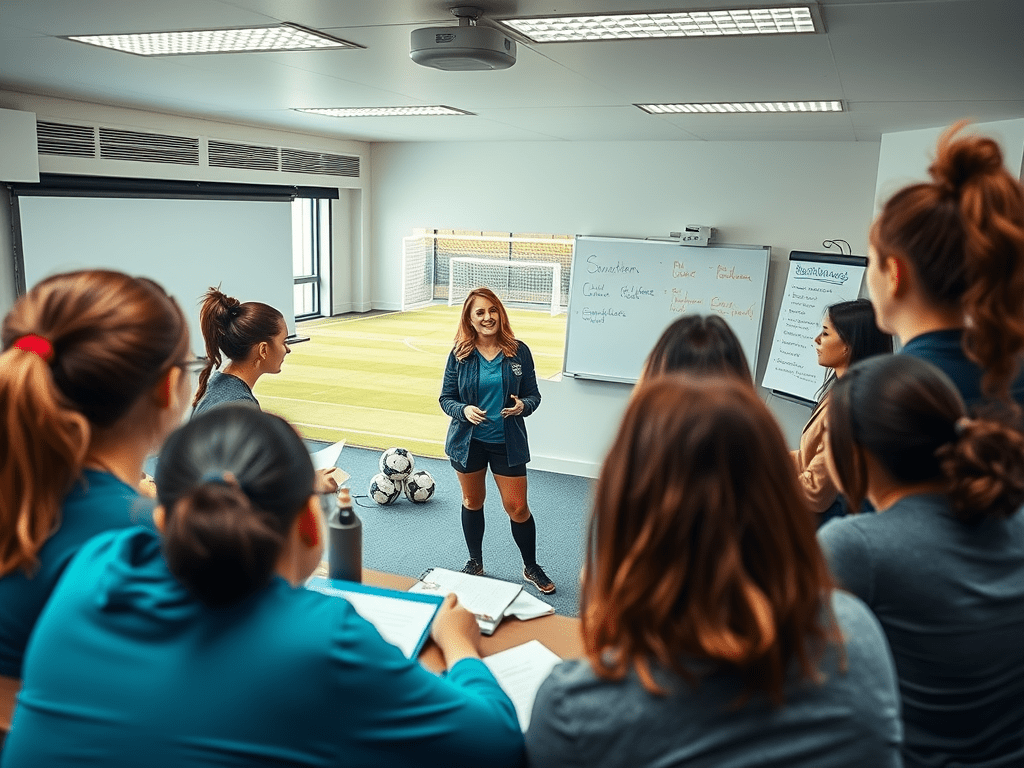
The training sessions are designed to be interactive and engaging. Instead of long presentations, participants work through scenarios, discuss definitions (such as positions of trust and misconduct), and explore red flag behaviors. These behaviors, often referred to as “poor practice” or “low-level concerns,” are reframed to ensure they are taken seriously.
Examples of red flag behaviors include public ridicule of a player’s performance or consistent violations of a club’s code of conduct. Lauren explains that while a single incident may be addressed as a red flag, repeated behaviors could indicate deeper issues.
Communication, Boundaries, and Leadership
A key focus of the training is helping athletes understand their boundaries and how to communicate effectively when something feels wrong. Lauren encourages players to trust their instincts and seek support when needed.
The conversation also highlights the role of leadership in shaping team culture. Carolyn notes that when poor behavior goes unchallenged, it can become normalised. Lauren agrees, pointing out that in hierarchical environments, top-down behavior often sets the tone for the rest of the team.
The training encourages staff to adopt a player-centered approach, recognising that athletes are individuals with different needs and responses. Effective communication and understanding context are essential to creating a safe and supportive environment.
Supporting Staff and Recognising Vulnerability
Lauren acknowledges that safeguarding isn’t just about players backroom staff and multidisciplinary teams also face pressures and vulnerabilities. In elite sport, job security can be fragile, and staff may feel replaceable.
The training sessions include separate modules for players and staff, allowing each group to explore safeguarding from their unique perspective. Staff are encouraged to reflect on their own boundaries and wellbeing, recognizing that they can’t support others effectively if they’re not taking care of themselves.
Carolyn adds that some professional codes of conduct, such as those for physiotherapists, now include mental health check-ins as part of workplace standards a sign that Professions are beginning to take wellbeing more seriously.
Social Media and Safeguarding Risks
The conversation turns to social media, where abuse and harassment are increasingly common for professional athletes. Lauren notes that while social media can be a powerful tool for personal branding and fan engagement, it also exposes players to criticism and hate.
Some players choose to avoid social media during tournaments, and there are efforts to analyse and categorise abusive interactions. Lauren emphasises the need for better support systems and policies to protect athletes online.
Carolyn points out that brand protection can itself become a safeguarding risk. When institutions prioritise image over wellbeing, individuals may feel silenced or discouraged from speaking out. Lauren agrees, noting that only a small percentage of players have access to agents or teams to manage their public profiles.
The Future of Safeguarding in Sport
Looking ahead, Lauren shares her vision for safeguarding in football and beyond. She hopes to see:
- An independent complaints body to investigate incidents across all sports.
- Healthy environments at every level of the football pyramid.
- Embedded athlete voice in club policies and decision-making.
- Improved support for managing online abuse.
- Continued growth in minimum standards and safeguarding education.
She emphasizes that safeguarding should be consistent across all sports, not just football. Kyniska Advocacy continues to lobby government for policy changes and works with clubs to deliver meaningful, athlete-centered training.
Final Thoughts
The episode closes with a reminder that safeguarding and environment are vital to performance. Every athlete deserves a space where they feel safe, supported, and empowered to speak up. Lauren encourages anyone interested in learning more or collaborating to reach out via Kyniska Advocacy’s website or social media channels.
This conversation offers a comprehensive look at how safeguarding is evolving in women’s football and why it matters now more than ever.
This blog was generated with the assistance of ChatGPT and edited by the podcast host for accuracy and tone.
Hashtags:
#SafeguardingInSport #WSL #LaurenMcMurchie #KyniskaAdvocacy #WomensFootball #SafeSport #AthleteWelfare #FootballPodcast #WomenInSport #PlayerCare #SocialMediaSafety #LeadershipInSport #SportForChange
 Women's Football Hub
Leave a comment